What Is a Switch in a Relationship?
The complete guide to switch identity — 5 types, the psychology behind it, and how switch dynamics work in dating and relationships.
Not sure if you're a switch? The free BDSM personality test maps your role across 8 axes — including switch tendencies — in 25 questions.
Alex Rivera, CSE
Certified Sexuality Educator (CSE)
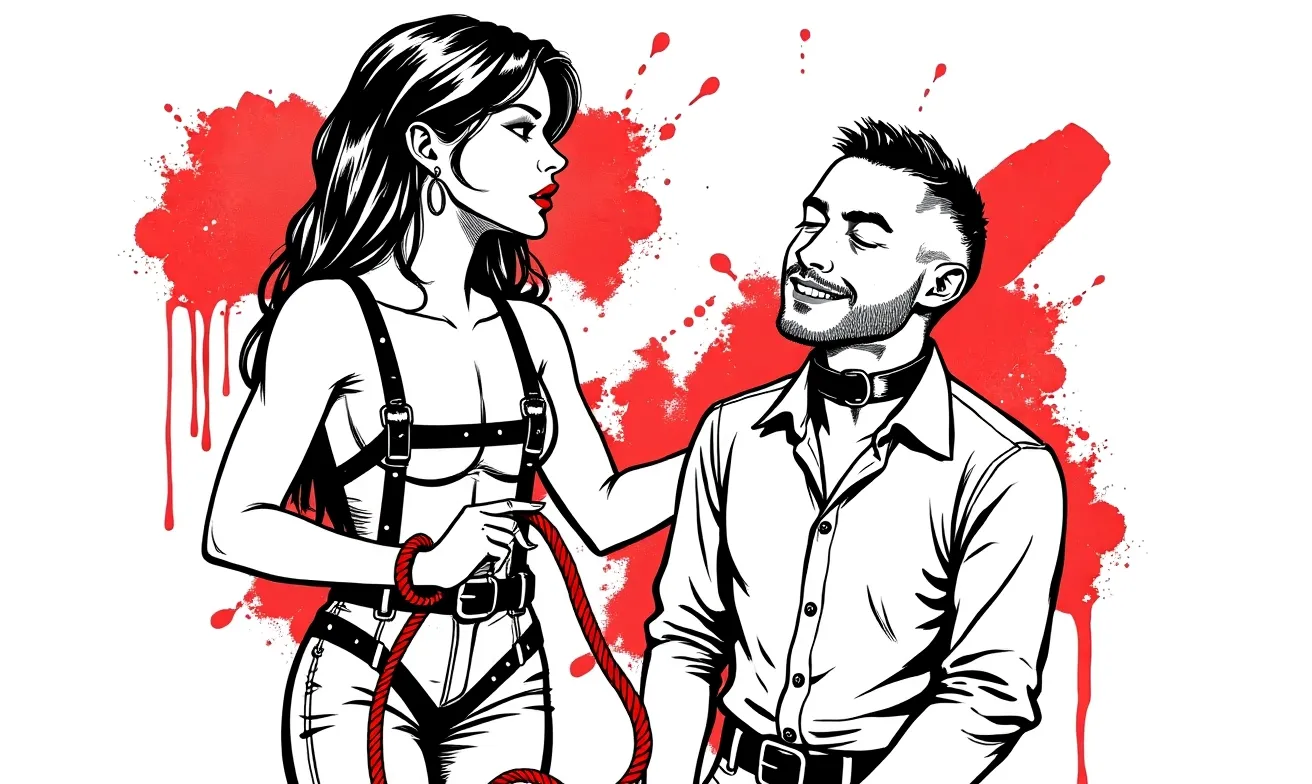
A switch is someone who genuinely enjoys both dominant and submissive roles in a relationship or sexual dynamic — alternating between giving and receiving control based on mood, partner, or context. It is a recognized orientation, not indecision. Roughly a third of BDSM practitioners identify as switches (Bennett, SAGE, 2025).
- 1A switch enjoys both dominant and submissive roles authentically — not as a compromise, but as a genuine dual desire.
- 2There are 5 distinct switch types: dom-leaning, sub-leaning, mood-based, partner-based, and true fluid switch.
- 3Being a switch ≠ being indecisive. A 2025 SAGE study confirms switch identity is stable and psychologically distinct.
- 4Switch dynamics require explicit role signals before each scene and separate aftercare plans for each role.
- 5Switches are most compatible with other switches or flexible-role partners, but fixed-role partnerships can work with honest negotiation.
Safety Note · Role Transitions
Switching roles mid-scene or mid-dynamic is not a free pass — each role transition needs explicit, re-negotiated consent. A "switch label" says nothing about blanket consent. Limits, safe words, and aftercare needs change between roles. For partner abuse concerns specific to LGBTQ+, kink, or polyamorous relationships, see Network La Red.
5 types
of switch orientation
community-recognized patterns
5 types
of switch orientation
classified by research
2×
more empathy as players
dual-role experience
#3
most common BDSM role
after dom and sub
Quick Answer
A BDSM switch is someone who genuinely enjoys both dominant and submissive roles in power exchange dynamics. Unlike those who identify exclusively as a dom or sub, switches alternate between giving and receiving control — based on mood, partner chemistry, or context — and experience authentic fulfillment in both positions. Community surveys and BDSM practitioner research consistently show switches make up a sizable portion of the kink community.
In This Article
What Is a BDSM Switch?
In BDSM, a switch is a person who authentically enjoys both dominant and submissive roles in power exchange dynamics. A switch does not simply tolerate one role while preferring the other — they experience genuine satisfaction, arousal, or fulfillment from both sides of the power spectrum.
Switching is distinct from experimenting or being unsure. Experienced switches describe it as a core feature of their sexuality: they might crave control one evening and deeply desire surrender the next, and both states feel equally authentic. The role can shift by mood, partner, activity type, or relationship context — and this fluidity is the point, not a limitation.
Key Characteristics of Switches
Genuine enjoyment of both dominant and submissive headspaces
Not tolerance — authentic desire in both directions.
Role preference shifts with mood, partner chemistry, or scene type
Context is the driver, not confusion.
Deep understanding of both perspectives in power dynamics
Having inhabited both sides builds rare insight.
Comfort with ambiguity and fluid identity
Stability comes from self-knowledge, not a fixed label.
Exceptional empathy as players
Dual-role experience develops nuanced partner awareness.
Strong negotiation skills
Flexible dynamics require clear, ongoing communication.
Community surveys consistently place switches as one of the largest orientation groups among BDSM practitioners — likely a third or more, when you count both pure switches and people who lean one direction but enjoy the other periodically. Yet switches are often underrepresented in educational content, which tends to focus on fixed dominant or submissive roles.
See the Kinktionary entry for switch for a concise definition, then continue reading for depth on types, psychology, and dating.
What Does It Mean to Be a Switch in a Relationship?
In a relationship, being a switch means your role isn't fixed — you and your partner negotiate who's leading and who's receiving each time you enter a scene, instead of assuming the same dynamic by default. It does not mean you're uncertain about what you want, and it does not mean every encounter is a free-for-all. The flexibility lives inside a structure: explicit communication, clear role cues, and re-negotiated consent at each role shift.
Practically, three things change compared to a fixed-role partnership:
- Role cues become explicit. Instead of assuming who's topping tonight, switches and their partners learn to signal current headspace ("I'm feeling submissive" / "I want to top tonight") before contact starts.
- Limits live with the role, not the person. What you want done to you when you're bottoming may differ from what you want when you're topping. Hard limits and aftercare needs travel with the role.
- Aftercare planning doubles. Both dom drop and sub drop are possible — sometimes in close succession across scenes. Switches build aftercare practices tailored to each role they inhabit.
For couples where one partner is fixed-role and the other is a switch, the dynamic works when the switch is honest about which side they're craving and the fixed-role partner respects that the request isn't a rejection — it's an invitation into the other side of the dynamic. Some couples solve the asymmetry by finding occasional ethically negotiated play partners for the underexpressed role.
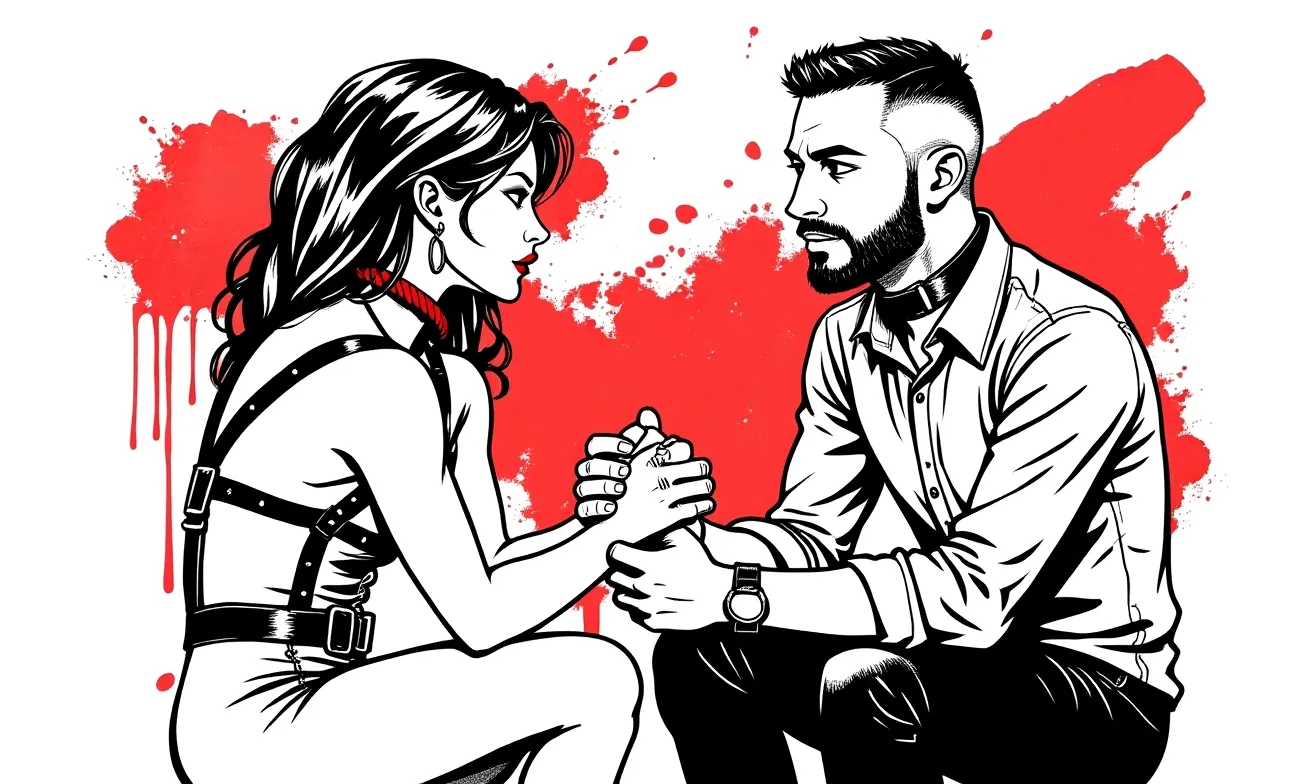
The 5 Types of Switches
Switching is not one-size-fits-all. People who identify as switches express their versatility in meaningfully different ways. Understanding these patterns helps you know yourself — and communicate your needs clearly to partners.
Dom-Leaning Switch
Spends roughly 60–80% of their time in the dominant role. They genuinely thrive with control and command — but periodically need to surrender and be cared for. Submitting occasionally refreshes dominant energy and deepens empathy as a top.
Sub-Leaning Switch
Predominantly enjoys submission but periodically wants to take charge. They may maintain a primary submissive relationship while seeking play partners with whom they can top, or alternate roles with a flexible dominant partner.
Mood-Based Switch
Follows emotional and psychological state above all else. A demanding work week might fuel a deep craving to surrender; a surge of confidence might ignite a desire to dominate. No predictable ratio — the role shifts organically with life.
Contextual (Partner-Based) Switch
Role depends almost entirely on who they're with. With Partner A, they fall naturally dominant; with Partner B, they naturally submit. This isn't performance — it reflects genuine chemistry and complementary energy between people.
True Switch (Fluid)
Has no stable preference and can shift roles within a single session — topping during bondage, then negotiating reversal, then switching back. This requires skilled communication and deeply trusting partners comfortable with constant flow.
"Switches often have the most nuanced understanding of power exchange precisely because they've inhabited both sides."
— Alex Rivera, CSE
The Psychology of Switching
Why do some people experience authentic desire in both dominant and submissive roles while others feel firmly anchored to one? Research is beginning to provide clearer answers — and the findings challenge outdated assumptions.
What the BDSM Research Actually Shows
Peer-reviewed research on BDSM practitioners over the last fifteen years consistently finds that flexible-role and switch-identified people score well on standard psychological well-being measures — and the broader BDSM community has been shown to be psychologically healthy in multiple studies.
Research Findings — Peer-Reviewed BDSM Studies
Higher openness to experience
In a 2013 study of 902 BDSM practitioners vs 434 controls, Wismeijer & van Assen (J Sex Med) found BDSM practitioners scored higher on openness — a core personality trait linked to creativity and intellectual engagement.
Comparable or higher subjective well-being
The same Wismeijer & van Assen study found BDSM practitioners reported equal or higher subjective well-being than controls, contradicting the myth that kink identity correlates with poor mental health.
BDSM identities show distinct, stable patterns
Newmahr's 2011 ethnography (Playing on the Edge) documented switch and role-fluid identities as recognized, stable orientations within established SM communities — not transitional phases.
Role flexibility ≠ indecision
Across community surveys and qualitative research, switches consistently describe role fluidity as a genuine preference rather than uncertainty about identity.
Power Exchange as Psychological Need-Fulfillment
From a therapeutic perspective, both dominance and submission fulfill distinct psychological needs. Dominance offers experiences of agency, responsibility, and structured authority. Submission offers experiences of release, trust, and being cared for.
For switches, neither set of needs fully overrides the other — they cycle. This cycling may reflect underlying personality complexity rather than ambivalence. Many switches describe that they would feel incomplete if forced to choose only one role permanently. The need for both is not a phase; it is the orientation.
Headspace & Identity
Both dominant and submissive headspaces involve altered psychological states — heightened focus, different emotional processing, and unique neurochemical signatures (often described as "subspace" or "domspace"). Switches are capable of entering both states, though many report needing deliberate transition rituals to shift effectively. That ritual process is a skill — and one worth developing intentionally.
Unique Challenges Switches Face
Switching comes with genuine advantages — but also specific challenges that fixed-role practitioners rarely encounter. Naming them clearly is the first step to navigating them well.
Compatibility Complexity
Many dating profiles and apps still present role as a binary — "dom" or "sub." Switches often find themselves awkwardly explaining their orientation during early conversations, encountering partners who assume switching means "no real preference." The solution: be specific upfront. Instead of just saying "I'm a switch," explain your patterns — "I'm a dom-leaning switch who tops about 70% of the time but genuinely values occasional submission."
The Headspace Transition Challenge
Shifting between dominant and submissive mental states is not effortless. Many switches report that abrupt role reversals feel jarring without adequate transition time and ritual. Partners who expect instant switching without adjustment can create frustration or even trigger drop. Building deliberate entry rituals is not optional — it is essential infrastructure.
Community Misconceptions
Despite switches being extremely common, they sometimes face skepticism — accused of being "indecisive," "not really kinky," or "unable to commit to a role." These attitudes are outdated and inaccurate. The evidence strongly supports switching as a legitimate, recognized orientation with its own distinct psychological profile.
Negotiation Overhead
Switch dynamics require richer negotiation than fixed-role relationships. Every scene may involve discussing current role preferences, what activities fit each role, and how transitions will be signaled. This overhead pays off in depth and flexibility — but requires intentional communication investment from both partners.
Switch Dating: Finding Compatible Partners
Finding compatible partners as a switch is very achievable — especially on platforms that support nuanced orientation expressions. Here's how to approach it strategically and what the data says about compatibility.
Compatibility Matrix
| Partner Type | Compatibility | Key Dynamic |
|---|---|---|
| Other Switch | ★★★★★ Excellent | Both partners can explore both roles, creating deeply flexible, evolving dynamics with full mutual understanding. |
| Flexible Dominant | ★★★★ Good | Dom who occasionally enjoys submission or power play variety — offers natural role-sharing without pressure. |
| Fixed Submissive | ★★★ Works | Works well for the switch's dominant side; may require additional play partners or explicit agreements for submissive needs. |
| Fixed Dominant | ★★ Depends | Depends heavily on the switch's lean and the dom's flexibility. Requires honest ongoing negotiation to sustain. |
Profile Tips for Switches
- →State your switch identity explicitly — don't leave it implied or hope partners will ask.
- →Describe your lean (dom-leaning, sub-leaning, 50/50) to set accurate expectations from the first message.
- →Mention what triggers your role preferences — mood, scene type, partner energy — so matches can self-select appropriately.
- →Be clear about whether you seek partners who also switch or fixed-role partners who are open to your versatility.
KNKI's platform supports nuanced role expressions — you can describe your switch orientation in detail, filter for partners who identify as switches or are switch-friendly, and connect via BDSM chat before meeting in person. The switch results page from our Kink Quiz offers additional community context and matching guidance.
FetLife communities dedicated to switches ("Switches Unite," "Switch Space") are active and welcoming. Local munches often attract a high proportion of switches who enjoy the social, non-fixed-role atmosphere of community gathering.
Communication Scripts for Switches
Clear, low-awkwardness communication is the backbone of successful switching dynamics. These scripts give you language that works in practice — not just in theory.
Expressing Current Role Desire
You
"I'm feeling dominant tonight — how are you feeling?"
Partner
"I'm leaning sub right now — that works perfectly."
Check-in
"Where's your headspace today? I'm leaning sub but flexible."
Negotiating
"I'd love to top this scene — would you be open to that?"
Explaining Switching to a New Partner
"I identify as a switch, which means I genuinely enjoy both dominant and submissive roles. Right now I tend to [dom/sub]-lean, but that can shift. The way I usually like to handle it is [your preferred communication method — check-ins, signals, scheduled discussions]. Does that work for you?"
Negotiating a Switching Protocol
Successful switch partnerships often establish a clear protocol upfront. Four elements to agree on:
Default role
"Unless we say otherwise, I'll be in dom headspace for this scene." Removes ambiguity.
Switch signal
A specific phrase or gesture that clearly signals a desired role change — agreed before play begins.
Response window
"If either of us signals a switch, we pause and check in before continuing." No ambiguous drifts.
Scene-only vs. relationship-level
Clarify whether role flexibility applies only during scenes or also in the broader dynamic day-to-day.
Read more about negotiation and consent in our guide on understanding consent in BDSM relationships.
Headspace & Role Transitions
One of the most practical challenges for switches is the psychological transition between dominant and submissive headspaces. These are meaningfully different mental states, and moving between them takes intentional effort — not just willingness.
Role Entry Ritual: A 5-Step Framework
Signal
Tell your partner your current headspace before the scene begins. Simple and explicit: "I'm feeling dominant tonight — where are you?"
Transition Ritual
Use a physical anchor — a change of clothing, a specific piece of music, a few deliberate breaths — to cue your nervous system that a role shift is beginning.
Enter
Allow 5–10 minutes to settle into the headspace before role-specific interaction begins. Rushing this step is the most common cause of jarring mid-scene disconnects.
Play
Stay present in the chosen role. If you notice your energy shifting, use your agreed signal rather than letting the scene drift ambiguously.
Aftercare
Both dom-drop and sub-drop are possible for switches — sometimes in close succession. Build aftercare practices tailored to each role you inhabit.
Managing Sub-Drop and Dom-Drop as a Switch
Switches can experience both sub-drop (the emotional crash after deep submission) and dom-drop (the crash after intense dominance) — sometimes in close succession if they switch roles frequently. Building robust aftercare practices tailored to each role is not optional. Aftercare for your dominant self looks different from aftercare for your submissive self — learn both.
Knowing Your Own Signals
Over time, switches develop self-awareness about what signals a shift in role desire — restlessness in a sub role when dominant energy is building, or a feeling of emotional fatigue that signals a need to submit and be held. Tracking these patterns in a journal can accelerate self-understanding significantly. What you learn becomes a map you can share with partners.
Not sure which type of switch you are? The KNKI BDSM personality test maps your orientation across 8 axes and identifies your switch lean precisely. Or use the yes/no/maybe checklist to see which activities you're drawn to in each role — the pattern reveals a lot.
If you already know you lean one direction, read our deep-dive: Dom-Leaning vs Sub-Leaning Switch: What's the Difference?

Frequently Asked Questions
A switch is someone who genuinely enjoys both dominant and submissive roles in a relationship or sexual dynamic. They alternate between giving and receiving control depending on mood, partner chemistry, or context — and feel authentic satisfaction in both positions. It is a recognized orientation, not indecision.
When someone identifies as a switch, they mean their role preference is not fixed. They may lead in one scene and follow in another, or shift roles based on their headspace that day. It signals flexibility and a genuine desire for both sides of power exchange — not confusion about who they are.
Yes. Many people discover they are switches after experimenting with both roles. Signs include secretly craving the opposite role to the one you usually take, feeling incomplete when locked into only one position, or noticing that your desired role shifts depending on a partner's energy.
Community surveys and BDSM practitioner research consistently show switches make up roughly a third or more of the kink community. A 2025 qualitative study by Bennett (Archives of Sexual Behavior) documented switch identity as a stable, recognized orientation — not a transitional phase.
Yes. Many switches build fulfilling dynamics with fixed-role partners. Success depends on honest communication about needs and sometimes finding additional play partners for the underexpressed role. Clarity and ongoing negotiation matter more than perfect role matching.
A dom-leaning switch prefers the dominant role roughly 60–80% of the time but genuinely enjoys submitting on occasion. They seek partners who are comfortable with some role fluidity rather than a strictly fixed dynamic. See our full guide on dom-leaning vs sub-leaning switches.
Common signs: you genuinely crave both control and surrender at different times; both dom and sub roles feel satisfying rather than merely tolerated; your preferred role shifts with mood, partner energy, or scene type. Take the KNKI BDSM test — it maps your orientation across 8 axes including switch tendencies.
No. A 2025 SAGE study by Bennett found switch identity is stable and psychologically distinct — not a transitional phase or sign of uncertainty. Switching reflects high psychological flexibility and openness to experience, traits consistently linked to emotional intelligence, not confusion.
Sources & Further Reading
Research
- Bennett, T. (2025). "Switch it up: A qualitative analysis of BDSM switches." Sexualities (SAGE). doi:10.1177/13634607241305967. (First peer-reviewed study focused exclusively on switch identity)
- Wismeijer, A. A. J., & van Assen, M. A. L. M. (2013). "Psychological characteristics of BDSM practitioners." Journal of Sexual Medicine, 10(8), 1943–1952.
- Newmahr, S. (2011). Playing on the Edge: Sadomasochism, Risk, and Intimacy. Indiana University Press. (Switch and role-fluid identity ethnography)
- Joyal, C. C., Cossette, A., & Lapierre, V. (2015). "What exactly is an unusual sexual fantasy?" Journal of Sexual Medicine, 12(2), 328–340.
- Newmahr, S. (2010). "Power struggles: Pain and authenticity in SM play." Symbolic Interaction, 33(3), 389–411.
Books
- Easton, D., & Hardy, J. W. (2003). The New Bottoming Book. Greenery Press.
- Easton, D., & Hardy, J. W. (2003). The New Topping Book. Greenery Press. (Role fluidity)
- Harrington, L. (2012). Playing Well With Others. Mystic Productions Press.
Community & Professional Resources
- NCSF — National Coalition for Sexual Freedom.
- Kink Aware Professionals (KAP) directory — Find a kink-knowledgeable therapist.
- Network La Red — Partner abuse support for LGBTQ+, kink, polyamorous communities.
Discover Your Switch Profile
Take our Kink Quiz to find out which type of switch you are — and get personalized guidance for your dynamic and compatible partner types.
Take the Kink Quiz →Related Resources
Alex Rivera, CSE
Verified ExpertCertified Sexuality Educator · BDSM Negotiation & Role Dynamics
Alex Rivera is a Certified Sexuality Educator (CSE) focused on BDSM negotiation, role dynamics, and consent-first practice. They run workshops on switch dynamics, role transitions, and aftercare for couples building flexible-role relationships. Their work is informed by peer-reviewed BDSM research (Wismeijer 2013, Newmahr 2011, Joyal 2015) and by direct workshop facilitation across kink-aware communities. Alex is a regular contributor to KNKI's educational content.
View full profile →