Shibari: A Beginner's Guide to Japanese Rope Bondage
Reviewed by Dr. Sarah Mitchell, Ph.D. — Chief Education Officer
What shibari actually is, why thoughtful people are drawn to rope, the physical risks no one mentions on the listicle pages, and how to take a first step that is honest about both the art and its real cost.
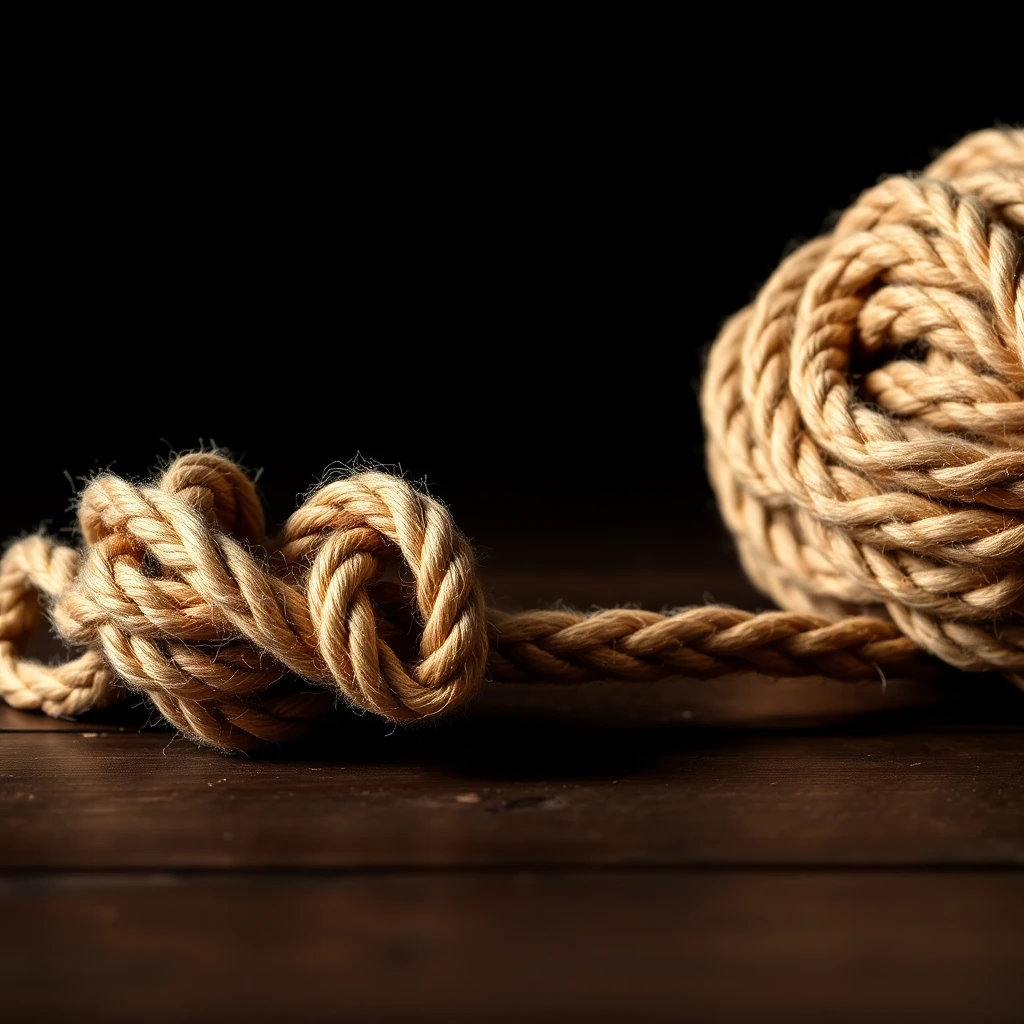
“The smile, the rigger later said, was harder to look at than her body — open and completely unguarded, the face of someone who had finally been seen wanting what she wanted, and not had to apologize for it.”
Safety & Consent First — Educational content for SSC adults. Always prioritize communication, consent, and safety with partners.
Shibari is the Japanese art of intentional rope bondage — using patterned ties to restrain and frame a partner's body. It is older than the BDSM community, more rigorous in its risks, and stranger in its appeal than most introductions admit. This guide covers what it is, why people seek it out, the medical risks (peer-reviewed), how to find a real first lesson, and a short readiness check to see whether rope is the right next step for you.
What Is Shibari?
Shibari (縛り) is the Japanese art of intentional rope bondage. The word translates roughly as “to tie” or “to bind.” In its modern Western practice, shibari refers to a tradition of patterned, geometric ties — chest harnesses, hip ties, full-body wraps, and suspension — using natural fiber rope, usually 6mm jute or hemp, in 8-meter lengths.
It is sometimes called kinbaku (緊縛, “tight binding”) — the older Japanese term, more associated with the erotically and emotionally charged tradition. In English-speaking BDSM communities the two words are used interchangeably.
Shibari is not the same thing as casual rope bondage. The distinguishing features:
- Patterned ties — specific ties have names, lineages, and decades of refinement (Takate kote, Hishi karada, Futomomo, Ebi).
- Body geometry — the rope follows the body's anatomy intentionally, distributing pressure away from nerves and joints.
- Relational practice — shibari at its best is about the connection between rigger (the person tying) and bottom (the person being tied), not the rope itself.
- Aesthetic intention — the visual composition of the tied body matters as much as the physical sensation.
Modern shibari blends a centuries-old craft tradition with contemporary BDSM practices: explicit negotiation, safe words, ongoing consent verification, and aftercare. The craft predates the BDSM community by a wide margin; the safety culture around it is more recent and is still uneven across teachers and scenes.
Why People Are Drawn to Shibari
The standard answers — it's sensual, it's artistic, it's a kink — explain very little. Ask people who actually go to rope events on a Tuesday night, and the same word comes back in three different versions.
Ask a regular at a rope studio in Brooklyn or the Mission why she comes, and you'll hear the same word three different ways. The corporate analyst who has to bow to clients all week says it's the only ninety minutes she doesn't have to decide anything. The woman whose marriage ended last year says she comes to take back the joy that got stolen somewhere along the way — sometimes she cries loudly in the rope, sometimes she spends extravagantly and asks for a specific rigger by name. The grad student in her twenties just says “freedom!” — and means that handing over control is the only way she gets to experience a freedom her ordinary life never offers.
Rope is not what they have in common. The shape of their week is.
The pattern repeats across rope studios from Portland to Austin to the Lower East Side. People come not for the rope itself, but for what the rope makes possible: a context in which someone else holds the frame, decides the next move, takes the responsibility — for ninety minutes — of being the one in charge. For people whose work and family life requires them to be the one in charge of everything, that inversion is the appeal.
This is the part the listicle pages never quite say out loud: shibari is, for many practitioners, less about sex and more about a particular kind of relief. The body, restrained, can finally stop performing.
The Real Risk No One Mentions on the Listicle Pages
Most beginner introductions to shibari treat “safety” as a paragraph at the end. The reality is more specific, more medical, and much more useful to know up front.
A peer-reviewed study published in Cureus (Khodulev et al., based on a series of cases tied to Japanese rope bondage and supported by their Clinical Neurophysiology 2019 case series and Muscle & Nerve 2020 conduction study) found that radial nerve compression at the upper arm accounts for roughly 90% of the bondage-related nerve injuries reviewed. The danger zone is anatomically specific: the radial nerve runs through the deltoid tuberosity area, approximately one-third of the way down the upper arm. This is exactly where standard chest harnesses cross — over the shoulder and down the upper arm.
This is not a theoretical risk. From the same body of clinical work:
A 29-year-old woman was suspended in a chest harness using 6mm jute rope for 25 minutes. The result: wrist drop, finger drop, numbness across the back of her hand. A nerve conduction study showed 77.3% conduction block. Recovery took five months.
Seventeen months later, the same harness compressed the same nerves bilaterally in just 8–10 minutes. Recovery that time took a week. Three years after that, a third compression triggered the same pattern in five minutes; she recovered in two.
Each subsequent injury comes faster. People with prior nerve incidents are not “fine now” — they are more vulnerable, not less.
The bluntest formulation of the risk asymmetry, repeated in rope communities for years: a rigger has many chances to make mistakes — they injure one bottom and find another. A bottom may have only one chance to make a mistake, and may never rope again.
The Four-Step Nerve Check
A test the bottom can run mid-scene to detect early nerve damage. Recommended by sports neurologists working with rope-injured patients. Run after every harness, every position change, and any time something feels off.
Touch sensation
Lightly brush a fingertip across each finger of the bottom's tied hand. Sensation should be consistent across all fingers and feel the same as the untied hand.
Thumb-to-finger reach
Bottom touches the tip of their thumb to every joint of every finger on the same hand. Any difficulty reaching a joint is a warning sign.
Wrist raise
Bottom lifts their wrist against gravity (extending the wrist back, as if waving someone off). Inability to raise the wrist normally — wrist drop — is the signature sign of radial nerve compression.
Stop immediately on any failure
If any of the three checks shows weakness, numbness, or asymmetry compared to the untied hand, untie that limb immediately. Do not "wait and see." Nerve damage compounds with time under compression.
Floor-based ties carry a fraction of the risk of suspension. The single most important rule for beginners: do not learn suspension from video. Suspension involves load-bearing, body-weight stress on the same anatomical regions where these injuries happen, with no margin for the kind of small mistake every beginner makes.
Is Shibari Calling You?
You've seen the appeal. You've seen the cost. The next question is whether the appeal is actually about rope or about something rope happens to be a vehicle for.
Two stories, neither of them yours, but both of them point at the kind of self-knowledge that comes before the first session, not after.
Years before her first session, she told a close friend she'd always fantasized about being tied up. The friend looked confused and asked “why would you want that?” — and the question sat on her chest for the next decade. The night of the session, she lay still with rope marks just starting to bloom on her wrists, and smiled at the window for no one in particular.
The smile was harder for the rigger to look at than her body. It was the face of someone who had finally been seen wanting what she wanted, and had not had to apologize for it.
A different story, a different demographic:
When the rigger asked gently if she worried about her child finding out, she snapped — not at him, at the question. “I've been held hostage by ‘good wife’ and ‘good mother’ for too many years. Please. I'm a person first. I have desires too.”
She had spent ten years in a marriage on autopilot. Rope, it turned out, wasn't the thing she came for. The thing she came for was permission to spend ninety minutes being neither wife nor mother — just a body that wanted to know what something felt like.
If reading those felt like recognition rather than curiosity, that's information. The readiness tool below asks seven specific questions designed to surface this kind of self-knowledge before you book a class.
What a Safe First Step Looks Like
The internet is full of people who learned shibari from YouTube and now teach it badly. The rope community has its own ways of distinguishing the people who actually know what they're doing — and they don't involve looking at someone's Instagram.
The art is in the hands, not the video
Watch an experienced rope teacher receive a new shipment of jute. He doesn't read the spec sheet. He rubs three strands between his fingers until the fibers separate like a small firework. He brings it to his nose and inhales. He holds it to the light. He exhales with a sound somewhere between recognition and quiet pleasure. Twenty years in, this is what he trusts: not what the supplier wrote on the label, but what his own hands know about what good rope is supposed to feel like.
That kind of judgment — the ability to feel rope tension shift, to notice when a bottom's breathing changes, to know when a knot is “just enough” — does not transmit through video. It is tactile, embodied, relational knowledge. A beginner cannot acquire it from a screen, and a beginner who tries is the beginner who hurts someone.
How to find your first lesson
- →Look for in-person classes at kink-friendly venues, dungeons, or rope studios in your city. FetLife events for your region is the most reliable index.
- →Ask about lineage. A teacher who studied under a recognized name (and can tell you who, when, for how long) is more trustworthy than someone who learned online. Lineage is not snobbery in rope — it's the closest thing to a credential the practice has.
- →Vet on negotiation, not aesthetics. Ask how they teach negotiation, how they handle a bottom asking to stop mid-class, what they do when a tie isn't working. The way they answer tells you more than their portfolio.
- →Floor first. Always. A teacher who suggests suspension in the first lesson is not a teacher you should book.
- →Attend a rope jam or peer practice before committing to private instruction. Watching how a community handles consent, mistakes, and aftercare in public is the fastest way to read a scene.
Negotiate the first session like you mean it
Before any rope touches skin, the bottom and the rigger should have an explicit conversation about: hard limits (body parts, intensity, duration), medical history (any nerve, joint, mobility, or breathing issues), the safe word and a non-verbal stop signal, who's holding the EMT shears, and what aftercare looks like — both immediately after and over the following 48 hours.
If a teacher or rigger resists this conversation, treats it as “ruining the mood,” or skips it for any reason — leave. There are good teachers in every major city. There is no good reason to learn from one who treats negotiation as optional.
KNKI Readiness Check
Are You Actually Ready for Rope?
A 7-question check developed from how the rope community actually screens beginners. It tells you which of three first steps fits where you are right now: ready for a guided session, curious but not yet ready, or a different practice may suit you better. Not a quiz. Not a score. A real signal.
7 questions, 2 minutes, 3 honest results. No account, no stored data — runs entirely in your browser.
Frequently Asked Questions
Shibari is the Japanese art of intentional rope bondage — using rope to restrain, support, and frame a partner's body in ways that are physically, aesthetically, and emotionally meaningful. The word translates roughly as 'to tie' or 'to bind.' Modern shibari blends a centuries-old craft tradition with contemporary BDSM practices like negotiation, consent, and aftercare. It is not the same as casual rope bondage — shibari emphasizes patterned ties, body geometry, and the relationship between rigger (the person tying) and bottom (the person being tied).
They overlap but are not identical. 'Kinbaku' (緊縛, 'tight binding') is the older Japanese term and is often used for the more erotically and emotionally charged style of rope work. 'Shibari' (縛り, 'binding') is broader and is the term most commonly used in English-speaking BDSM communities. In practice, the two words are used interchangeably outside Japan, while inside Japan kinbaku still carries a more specific tradition. For a beginner reading this guide, treat them as the same thing.
Shibari carries real, well-documented physical risk — the most common injury is radial nerve compression at the upper arm, which can cause weeks-to-months of weakness, numbness, or loss of hand function. A peer-reviewed study published in Cureus (Khodulev et al., based on cases tied to Japanese rope bondage) found that radial nerve compression accounted for around 90% of bondage-related nerve injuries reviewed. Floor-based, beginner-level ties carry far less risk than suspension. Working with a teacher, knowing the four-step nerve check, and never self-teaching suspension are the three highest-impact safety practices.
You can learn the names of ties from YouTube. You cannot learn shibari. Rope literacy is tactile — you have to feel rope tension shift under your hands, and notice when a bottom's breathing changes. Suspension and chest harness work in particular should never be self-taught from video. The standard advice across the rope community is: floor ties are okay to study from video as supplementary material, anything off the ground requires in-person instruction with a qualified teacher.
The traditional choice is jute rope, usually 6mm thick, in 8-meter lengths. Hemp is the next most common option — it has a similar feel and is more forgiving for beginners. Synthetic ropes (nylon, MFP) are sometimes used for play parties because they're easier to clean, but they slip differently and are generally not recommended for learning shibari technique. Avoid hardware-store rope, decorative cord, and anything that 'looks pretty' on Amazon — rope quality directly affects safety.
Look for: (1) in-person classes at a kink-friendly venue, dungeon, or rope studio in your city; (2) workshops listed on FetLife events for your area; (3) reputable instructors who have been teaching for at least 3-5 years and can name the lineage they were trained in. Avoid: anyone who teaches suspension to absolute beginners, anyone who frames their classes around 'sexy ties' rather than fundamentals, and anyone who skips negotiation and consent in their first lesson. A good teacher leads with safety, not aesthetics.
No. Many beginners start with self-tying, a willing friend who isn't a romantic partner, or by attending rope jams (open practice events) where pairing happens informally. Some classes provide tie partners. If you're learning specifically because you want to share rope with a romantic partner, take the class together — rope dynamics depend on communication and comfort that's hard to retrofit.
Most beginners report two surprises. First: rope is heavier and warmer than they expected — the texture, the weight against the skin, the sound of strands being pulled through itself, all create a sensory environment unlike anything else. Second: the emotional intensity is not from the restraint itself but from being witnessed. The act of letting someone tie you — slowly, attentively, with full focus — is for many people the first time they've been the singular object of someone's care in years. The body feels held; the mind quiets.
Stop immediately if: hands or fingers go numb or tingle (especially the back of the hand or thumb), you can't move your wrist or fingers normally, skin turns white or blue under the rope, breathing becomes labored or constricted, you feel lightheaded or nauseous, the bottom asks to stop or uses a safe word, or anything feels emotionally wrong. Have EMT shears within reach throughout every session. Nerve injury can happen in under 10 minutes — there is no 'push through it' in rope.
Sometimes. It depends entirely on the people involved. Some practitioners treat shibari as a meditative craft with no sexual element. Some integrate it into a sexual or D/s dynamic. Some attend rope events where the practice is explicitly non-sexual and erotic touch is off-limits. Western culture often defaults to assuming all rope is foreplay; the reality in the rope community is much more varied. Negotiate this explicitly with any partner before starting.
Continue Exploring
BDSM Personality Test
A 5-minute AI conversation that identifies your role and what dynamics fit you.
Yes/No/Maybe Checklist
150+ activities to rate and compare with a partner before any first session.
Complete BDSM Aftercare Guide
What to do after intense scenes — from the first 30 minutes to 72-hour check-ins.
CNC Kink Guide
Consensual non-consent, the consent infrastructure, and how to negotiate edge play.
KNKI Community
Find People Who Take This Seriously
Rope is a relational practice. KNKI members can mark rope interest on their profile, find others in their city, and connect through verified, encrypted messaging. Free signup. Anonymous scene names. 18+ only.
Join KNKI Free